While you go about your day, think about all the times you use water: as you sip your morning coffee or tea; while you belt out another song in the shower; each time you flush the toilet; as you let the kitchen sink run to warm up the water for dishes; while drinking another bottle or glass of it to stave off the intense summer heat. Now imagine trying to get through your day without water. Imagine reaching for that faucet or toilet handle and getting nothing in return. Now try to think how well you would cope with 5 days without running water.
This has been the situation for the nearly 5 million citizens of Ankara, Turkey's capital city, since Monday when a major water main broke following the first days of water rationing due to a severe and ongoing drought, a 76% annual rainfall deficit as of December 2006, and exacerbated by possibly negligent leadership on the part of municipal officials.
City officials imposed water rationing on August 1 as the city's water reserves shrank to just 4% of capacity, or about 6 billion cubic feet of water. One cubic foot of water contains 7.5 gallons, about 28 liters, so that's 45 billion gallons, or 171 billion liters. Most news reports claim Ankara's reserves are only enough to last the city two months.
A human being needs anywhere from 1 to 5 gallons, or 4 - 19 liters, of water per day just to survive. That does not take into account our many other uses of water in an average day, which for those of us in the U.S., the US Geological Survey estimates to total between 80-100 gallons, or 300-380 liters, each day. Most of that, literally, goes straight down the toilet.
Ankara's water rationing plan, which cut the city in two in order to alternate two-day waterless periods, would be difficult enough this time of year, with temperatures reaching 100/40 degrees. The first water main ruptured while the city was attempting to restore water to one part of the city. According to news reports, three mains have now ruptured. Monday's main burst must have seemed like a bad dream to those in the directly effected neighborhoods, suddenly flooded with the water they had been without for two days, only to see it lost to the sewers.
Water was restored to the city on Thursday evening, and officials are saying rationing will not resume for 10 days, but not before the effects were felt profoundly across the city, with residents trying to cope any way they were able. Hospitals have been in dire shape, forced to discharge patients and cancel even some non-elective surgeries because the tanker trucks supplying their water have only provided about an hour's worth of water, leading to hygiene concerns.
Much of the criticism surrounding the situation this week focused on Ankara's mayor, Melih Gökçek, accused by national water officials of ignoring warnings of an impending crisis as far back as 2004 while focusing municipal funds on more visible projects, such as highway improvements. Gökçek's response to this week's crisis was to call for residents to take holidays outside the city. Really. He didn't mention how long they should stay away, but it's hardly effective management of the situation. Perhaps, if he resigns, as some some are now calling for, he could find a second career here in the U.S. with our Federal Emergency Management Agency, where I suspect he might fit right in. The city is only recently began construction on a 230 mile/375 kilometer pipeline to divert water from the Kizilirmak River, the country's longest, which runs east of the city. Unfortunately, the project is not due to be completed, and water not supplied to the city from the river, until November or December and diversion projects are not without their own concerns.
Unfortunately, Ankara is not the only part of Turkey facing a water crisis, it is only the most dramatic example. A report from the WWF in Turkey details a dry future for the country. İstanbul, while faring better than Ankara at the moment, has only enough water in reserves for the next 4 months. The city is working on a project to divert water from Melen that is scheduled to be completed in October and desalinization, but 120 days of water on hand is hardly a comforting thought for a city of 10 million people. According to a report by the Turkish Union of Agricultural Chambers, the drought cost the country about 3.9 billion dollars (5 billion YTL) in 2006 alone and is forcing the government and agriculture sector to reevaluate just about everything at the risk losing thirsty crops, such as tea. The drought could also affect the country's power grid, with reduced productivity at hydroelectric plants.
Amazingly, despite reports of a increasingly hot and drought-plagued future for the Eastern Mediterranean and despite Ataturk's capital running out of water, Prime Minister Erdoğan seemed to downplay this critical issue. When asked, following his swearing in on Saturday, if his family was effected by the shortages he stated, "We have no water problem in our house at the moment. We have a water tanker. I think the problem is being considerably exaggerated." Tell that to the man in Ankara who, after 6 days, resorted to bathing with the water from his aquarium; or to the farmers in Thrace or Konya watching their crops wither; or to shoppers in the markets facing rising food prices; or those in Ankara being charged extortionist prices for plastic water jugs and bottled water.
While Erdoğan and other officials, even Gökçek, are right to blame the drought on global climate change, they cannot lay the blame for inadequate response at the feet of Mother Nature, nor should these effects of climatic changes have come as a surprise. It is true Erdoğan's recently re-elected AK Party didn't cause the drought, but they are responsible for dealing with the situations resulting from these all-too apparent changes.
One would think the capital city of a large country running out of water for a week would make the evening news in the U.S. It seems dramatic enough to fit the "if it bleeds, it leads," criteria for broadcast journalism. Yet, little of the wildfires, soaring temperatures, withering crops, or parched cities have been able to break into the news cycle in the U.S., parts of which are facing the same problems. Driving down the street today, with temperatures in drought-stricken Atlanta topping 100 degrees, I was stunned to see a university and several private homes watering their lawns with sprinklers despite restrictions in place. I have heard people in Florida mutter about restrictions because they cannot wash their cars, which borders on obscene to me. I would dare such people to complain about that one to the people of Ankara.
More people around the world seem to be accepting the phrase "climate change", but not the realities related to it. You may not think the problems of the people of Ankara are your problem, but they may be providing a clue as to what is to come in their own backyard. "Drought and desertification threaten the livelihood of over 1 billion people in over 110 countries around the world," according to former U.N. Secretary General Kofi Annan. For years, experts in many fields have warned that we are entering a era where water will supplant oil as the commodity of conflict. We must understand the issues in our own watersheds, in the face of inadequate leadership (I'm looking at you, Bush administration), take steps we are able to on our own, and demand more of our leaders and policy makers. There are steps that can and must be taken now, not all are simple, such as changing in zoning and building codes, and many must be made in partnerships with other countries, such as access rights and protection of major river systems, but we can no longer wait, or else we all risk reaching for a glass of water one day and coming up dry.
Salaam.
Resources:
Water, Use It Wisely
Water Conservation Tips
U.N. Water For Life - Decade for Action 2005-2015
International Forum on Drought 2007
World Water Council
WWF Turkey
Black Sea NGO Network
10 August, 2007


05 August, 2007
August 5, 2007
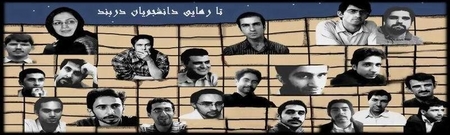
I don't blog much about Iran because I don't know enough and I've not yet been there, but I do want to support this effort to remember student activists jailed there in the struggle for democracy. Read more about the creation an online memorial today, the 101st anniversary of the Iranian Constitutional Revolution. For today, I'll be renaming the blog in solidarity.
Salaam.
01 August, 2007
Mr. Wizard's Kitchen
I just have to rave a wee bit about my birthday dinner. My friend's I've been staying with in Atlanta took me to Element. Richard Blais, a practitioner of molecular gastronomy, now runs the kitchen and reviews have been good. I'd first read about El Bulli (under "gastronomy" in the white column click "general catalogue" and start drooling at the "food porn") and this whole culinary movement a few years ago and was intrigued.
Things like liquid nitrogen figure into several dishes, but it's never gimmicky. All the technical whiz-bang is meant to bring out the best of the ingredients. The menu is mind-bending in it's false simplicity and odd ingredients: "melted lamb" in a pasta dish; "carbonized octopus"; "artichoke soda" (surprisingly good); "Coca-Cola rocks" (syrup flash frozen) atop panna cotta. In between your orders the kitchen sends out little gifts - taro root chips with three tiny, jewel-like cubes of jellied essence of salsa; "candied corn" frozen with liquid nitrogen - pop a few kernels in your mouth and let the "smoke" flow out your nose (if you can stop giggling); "peach nigiri" with goat cheese. Some of our favorites from the tapas-style menu: diver scallops with white chocolate risotto (which had a wonderful hint of key lime flavor to it) and the beef "cap" with blue cheese and creamed corn. Every bite was out of this world. The only wrong note, to me, was the "Red Velvet cake tartare", which was too deconstructed, leaving little of anything but some lines on a plate. The cream cheese ice cream that accompanied it was delicious, though. Our other desert, a sort of chocolate cake Oreo with "strawberry water" and an outstanding sweet basil sorbet, was wonderful.
Even better? Aside from the excellent food and drink, word is Blais is a nice guy chef, not a rampaging ego maniac. I hope that's true and it certainly seems to be reflected in his restaurant, which is very relaxed and welcoming; a world-class kitchen attached to an easy-going neighborhood restaurant. Lack of pretension, affordability, and just plain fun, make Element worth trying if you're in Atlanta.
Salaam.
كلام نواعم : Sugar and spice, but they don't always play nice!

Public Television's Wide Angle aired a great documentary, Dishing Democracy, about Kalam Nawaem/كلام نواعم last night.
Those of you who missed it will soon be able to watch it free in its entirety on the accompanying web site, which includes additional resources regarding satellite television in the Middle East. Be sure to look at the Resources link, which provides links to organizations, films, programs, journals, and more about Arab media and the region.
Salaam.
What $650 million buys you in Turkey these days
Drink up while you can, Turkey. I was reading an article about the return of the balık-ekmek boats to Istanbul's Eminönü district when I saw this headline: Rivers to be privatized as a solution to water crisis. I am not a supporter of privatized, corporatized water and certainly not privatization of whole rivers and lakes. The article says 12-13 rivers are to be SOLD for a period of 49 years, including the Tigris ($650 m. for 29 year rights) and Euphrates ($950 m. for 29 year rights). There is no explanation of how this strategy will solve the stated water crisis. Also, no word on potential reactions from Syria and Iraq, which lay downstream. Also according to the article, the transfer of water resources to the private sector may require a constitutional amendment. It sounds like a bad idea to me....
While climate change is certainly making life harder in Turkey, things aren't much better in Egypt or the rest of the Mediterranean, either. And if you think it's hot and dry now, just wait...
Salaam.
While climate change is certainly making life harder in Turkey, things aren't much better in Egypt or the rest of the Mediterranean, either. And if you think it's hot and dry now, just wait...
Salaam.
30 July, 2007
Where ًto next?
So, I am waiting on my new passport and contemplating heading East in a few months.
I was worried about the processing backlog, but I called this morning and was told my renewal application was moving along well. The man on the phone was actually very nice (even wished me a happy day before my birthday), but I suppose I'll believe him when the passport is in my hand, hopefully soon. In my procrastinating glory I waited until the beginning of July to apply for my renewal.
The U.S. government changed the old rules for travel, which permitted travel by land, air, and sea to Mexico, the Caribbean, and Canada and subsequent re-entry to the U.S. with only valid photo i.d. or a birth certificate. Unfortunately, they didn't bother to adequately set up the infrastructure to process all these new applications, leading to waits of up to three months. My, I feel safer already. And, human nature here being what it is, Americans are shocked to find out about all this after a year of notices in the media and from travel professionals. When I turned in my materials, the woman behind the counter had all sorts of horror and humor stories such as people applying a week before their date of departure under the assumption they'd get their passport overnight. It says a lot, to me, about this country that only about %25 of Americans hold valid passports.
I am looking into CELTA certification programs in Istanbul, Beirut, Cairo, Oman, UAE, Qatar, Kuwait, and Morocco. There are several that begin in October. I would love to make use of my Arabic, but also wouldn't mind building up my Turkish. If anyone has any feedback (positive or negative) on the programs, please let me know. Other than Istanbul and Beirut, the courses are all through the British Council. Or, if you would like to sell me on a particular city, offer to pick me up at your airport, or buy me a beverage, feel free to speak up as well.
Salaam.
28 July, 2007
Tributes
I often read a news article without noticing the byline or the names of those who contributed to the reporting. It's the nature of journalism, I suppose, impartiality, anonymity.
However, I noticed the names on this article from today's New York Times. Khalid W. Hassan was killed July 13. This article, about something as simple and yet complex as ice, is a tribute to his work.
Also, I was fortunate to see the photo exhibit Unembedded this week before it ended its run in Atlanta. The exhibit is headed to New York City through October. The works of photographers Ghaith Abdul-Ahad, Kael Alford, Rita Leistner, and Thorne Anderson are not to be missed. If you can see the exhibit in person, be sure to look at the images on the web site. For those of you in the U.S., this is what you aren't seeing on the news. Some of the images may be difficult, but this is reality for millions of people and those stories need to be told.
Salaam.
Wrenches in the gears of life
I received an email from someone noting I hadn't written anything in a while. Here is why and some rumination on it. I've been helping the friends I am staying with deal with some things, which has left us all with a serious lack of clarity. My friend was forced to move her mother into an assisted living facility due to her steepening decline from dementia. Between moving her out of the apartment and into her new room, my friend had to move her mother into her home because her mother had taken to wandering at night. In the midst of all that my friend's husband contracted a staph infection in one leg and was hospitalized for a week while I took care of her mother at home. I now have an intense respect for those who care for the elderly. I might add, and my friend would tell you herself, that her mother is not the sweetest woman in the world, to put it mildly. Suffice to say our collective karma is squeaky clean thanks to her and these last few weeks. The husband is on the mend and doing well-ish and her mother is getting acclimated to her new surroundings, obsessing and complaining about a lot of it.
A few things to note from all this...The Boomers growing older, living longer, and with "golden years" vastly different than their parents' generation. Meanwhile, Americans are saving less, faced with rising housing, food prices and gas prices (in a car-dependent country), the numerous difficulties with the health care system, etc. When you spend a majority of your paycheck on the rent, when the cost of a higher education pushes it out of some families' reach, when you have to move because you can't afford to fill your gas tank to drive to work, how do you pay to take care of mom and dad when they can no longer take care of themselves? My friend and her mother are lucky. Several years ago, in a fit of good sense, her mother bought a long term care insurance policy. If she had not, her daughter tells me, her late husband's pension and her Social Security check would not be enough to afford the facility she moved into this week; it is specifically designed for dementia care and is split between four wings to allow the residents to progress through the stages until such a times as they need invasive nursing care. Her room, including meals, management of her medications, activities, and housekeeping will cost about $4000 a month. My friend looked at several facilities, some less expensive. She noted that one $1000 a month facility smelled terrible and that even one $2000 a month facility was simply not acceptable to her. There were some within each price range that were more than adequate in general, but this was the best for her mother. However, what about those without insurance, pensions, or adequate Social Security income? What about somebody just scraping by? I can only guess they take their parent home and hope for the best; hope they can manage the growing list of meds and dosages; hope they can figure out how to keep their mother or father safe and at home while they are at work; hope that their energies and sanity hold out.
A tip to those of you pursuing a law degree: elder care will be the next hot area of law that needs to be filled. My friend was referred to a lawyer who specializes in elderly issues. She has more business than she can handle. She helps families negotiate things like Veterans' Administration benefits. Speaking of the VA, they are hardly forthcoming with those benefits. My friend was lucky that the manager of the dementia care facility asked if her mother or her mother's spouse was a veteran. Turns out there is a sizable benefit for veterans and their spouses who can no longer care for themselves to pay for in-home care or assisted living. However, after months of searching for just such a benefit online, my friend hadn't come up with a thing. In addition to not being forthcoming with the existence of the benefit, everyone she has spoken to has warned her the tons of paperwork involved are ridiculously complicated. Again, luckily she can spend the $300 to hire legal help. And again, what about those who can't?
Much like the $1000 anti-biotic my friend's husband was prescribed, the world shouldn't work this way. If this is the most powerful country in the world, what does it say that we can't find a way to adequately care for our elders across the board. There are tangential issues here, sure. We are removed and, in my opinion, phobic about the aging process and death in this society. Living in Morocco, with families where three generations in a home is still common, the process of life, beautiful and ugly, is immediate and real. There is a tangible segregation of the elderly here and a generally accepted lack of respect. Instead of being seen as experienced, knowledgeable, and someone worthy of respect, and elderly person is likely to be seen as slow, dull, a dinosaur lurching toward the grave. Perhaps this will change with my mother's generation, perhaps not.
So what's to be done? Much like with the issue of child care, elder care will require changes to the broader society and issues directly related to the issue. More transparency on issues related to benefits and how to apply for them and flexible work schedules for those caring for elderly parents. The solutions will only be found when we deepen the conversation, but with about 78 million Baby Boomers set to change the face of this country as they age, we have to start now.
I remember asking people in Damascus about the then newly-opened retirement home in Mezze, the first of its kind there.
"It's for people who do not have families," I was told.
Salaam.
10 July, 2007
Disrespect
20 year-old Aniisa Karim, a Muslim woman, was denied entry into a municipal courtroom in Valdosta, Georgia earlier this month because she was wearing a headscarf.
According to the the Council on American-Islamic Relations (CAIR), contacted by Karim following the incident, "The lifelong Muslim is African-American, born and raised in Baltimore. A disc jockey for WAAC-FM Country Music Radio in Valdosta, Karim is about as apple-pie American as it gets."
The Anti-Defamation League (ADL) also released a statement criticizing Valdosta court officials regarding the matter. The ADL statement reminded readers that such cases are not Muslim-specific, but rather a matter that relates to several faiths.
For those of you dealing in stereotypes: Ms. Karim is NOT Arab (85% of Muslims are NOT Arab (ADC) and not all Arabs are Muslim), she IS American (none of this 'go back to your own country' garbage), she's works (gasp!) in the music business (not everybody thinks music is evil) at a Valdosta Hip-Hop radio station.
Then there's the issue of why she was denied entry. According to the Valdosta Daily Times "Karim said one of the officers told her that the denial of entry to the courtroom was due to “homeland security reasons” and that allowing her to enter would show “disrespect” to the judge..."
Let's deal with the "security" issue first. While there are several different styles of hijab, it's not really an easy place to conceal a dangerous weapon. I actually had a farcical discussion about this with a friend who does wear hijab once. She joked that the only thing dangerous that would fit in her headscarf was her "devastatingly beautiful hair", said while miming a Pantene shake-out of her hair. While I suppose anything is possible, Ms. Karim did offer to subject her head and the rest of herself to additional security screening short of removing her head scarf and otherwise proved no threat to court officers. Was she acting inappropriately, erratically, suspiciously? No, she simply wore her hijab, which unfortunately is equated by many with the previously mentioned behaviors. She even asked court officers and a court clerk if she had any options available to her that would allow her to retain her headscarf while attending to her legal matter at the court.
As for her headscarf "disrespecting" the presiding judge, I cannot figure out how a piece of fabric worn on the head is capable of disrespecting a person. That's impressive for a piece of cloth. Would the judge be similarly disrespected by non-Muslim head wraps? A bandanna?
The Valdosta Daily Times nailed the issue in one line of a recent editorial on the issues of freedom: "Too often, these days, we are willing to trade a great deal of freedom for an uncertain level of security.Disrespect is a key word here. Barring the Muslim woman’s admittance to court because of a tenet of her religion disrespects her as an individual and her faith. It disrespects the courage of the Founding Fathers. It disrespects the sacrifices of generations of Americans both in the United States and across the world."
Indeed disrespect if the key word here. Hijab is not one of the five pillars of Islam and is, in fact, a subject of dispute with some Muslims as to whether it is required and how it should be interpreted. Not all Muslim women wear hijab. Nor are those who do meek victims. Some, admittedly not all, make the choice to wear hijab on their very own. I know professors, poets, lawyers, journalists, police officers, athletes, etc. who lead full lives with covered heads. The Founding Fathers of this nation understood the need to protect religious freedoms for all faiths, descended as they were from the bloody religious conflicts of Europe. Thanks to U.S. Rep. Keith Ellison, we know Thomas Jefferson owned and read a copy of the Quran. That the image and understanding of these broadminded, yet often contradictory, men have been warped into that of narrow-minded, Christian-only zealots bent on shoring up divisive agendas disrespects them and what they believed in and fought for. As for the generations of Americans who fought wars to protect the rights and freedoms this country was founded on, any infringement of those rights and freedoms disrespects them and their sacrifices.As of July 7 neither city officials nor the nearly "disrespected" judge are talking. A Laurens County, Georgia judge issued a formal apology and amended their policy last year after a Sikh was denied entry into the courthouse due to a "no hats" policy. In the press release detailing the resolution of that case, Sikh American Legal Defense and Education Fund President Mirin Kaur noted the importance of challenging such incidents, “The changing of the court policy will not only affect Sikh Americans but also Muslim men with skullcaps, Muslim women wearing hijab, Jewish men with yarmulkes, Christian women with religious head coverings, and all other people who wear mandatory religious attire.”
It is a remarkable privilege that we are permitted to practice or not practice a faith in this country and that this freedom is protected in our Constitution. We need to remember that all faiths are protected in this country, whether you believe in them, agree with them, or not, and that those who practice those faiths have certain forms of expression guaranteed them by law and accepted understanding of basic human rights.
People, Muslim and Non-Muslim alike, need to understand once and for all that Muslim women are far more than what they do or do not wear on their heads. For that matter, so too are Sikh men, Jewish and Christian women who cover, Jewish men wearing the yamulke, or anyone whose religious beliefs include similar outward expressions, more than what they wear. Take people for who they are, not what they wear.
Salaam.
08 July, 2007
Have a Little Faith In Us
The woman seated across from me on MARTA stared at my t-shirt and squinted as she re-read the words. It was late, she looked tired, and it wasn’t the first stare my shirt had garnered that day.
This is what a Radical Muslim Feminist Looks Like.
The corners of her mouth crept up into a slight smile. “Ok then,” she said, chuckling a bit. We ended up having a great conversation – turns out she’s from just outside my mother’s hometown in Mississippi and is part of the Katrina Diaspora scattered across the country, struggling to reclaim their lives.
More importantly, she didn’t flinch at faith.
Unfortunately, it seems the organizers of the first United States Social Forum flinched. Outreach to progressives of faith regarding the Forum was insufficient. Local Muslim, Jewish and Buddhist friends said they knew of no outreach from USSF organizers or affiliates to their congregations. Other progressives of faith from around the country told similar stories.
Throughout the week I was met with bewildered looks, awkward silence, and even mild hostility if I mentioned pertinent issues of faith during some workshops. One young woman I met spoke of how uncomfortable she felt identifying herself as a Christian in any context during the week, despite being a committed and active progressive.
The experiences of others and myself at the Forum highlight what seems to be a lack of comfort with and inclusion of religion and people of faith with a certain element on “The Left” and within the progressive movement. This lack of cohesion and, sometimes, outright exclusion weakens both the faith-based and broader progressive movement denying them the benefits to be found in perhaps unexpected coalitions such as new ideas, energies, and partnerships.
These days religion is more likely associated with conservatism, extremism, even militarism and consumerism. The existence of a religious Left has been all but forgotten as the U.S. lurched towards the Right in recent years. The narrow, conservative, antagonistic view of religion is partly the fault of media misrepresentation.
Media Matters highlighted the issue in their report Left Behind: The Skewed Representation of Religion in Major News Media, which analyzed coverage beginning the day after the 2004 election through the end of 2006. According to the report, conservative religious leaders were quoted, interviewed or mentioned 2.8 times more often than progressive religious leaders when reviewing newspaper and television coverage combined. Television, which Media Matters constrained to the three major networks, three major cable news channels and PBS, provided outlets for conservative religious leaders 3.8 times more often than for progressive leaders. Major newspapers utilized the voices of conservative religious leaders 2.7 times more than those of religious progressives. The bias is remarkable given that most in the US hold what would be considered progressive views, based on a recently released report by Campaign for America’s Future and Media Matters reviewing polling data from reputable sources such as Pew Research and Gallup.
Atlanta was selected as the host city for the US Social Forum because of the city’s significance in the US civil rights struggles. Anyone who knows anything about that progressive movement knows people of faith were at its forefront.
I am not a resident of Atlanta, but I reside here temporarily. I mention this because it means my ability to engage in outreach to any community is limited given my transient status. I share the ideals espoused by organizers of the Forum and signed up to volunteer in order to make it happen. My first question to people in the local organizing office was what outreach had been made to the faith community and specifically, because they are often forgotten in such efforts, the Muslim community. I was met by polite, yet unsatisfying answers:
“We don’t have any contacts.”
“I wouldn’t know how to approach them.”
“We don’t do religion.”
I had no contacts and only a week before the start of the Forum, but I did have an Internet connection. A quick Google and Salat-O-Matic search led me to the only mosque I knew and coincidentally the largest in the area: Al-Farooq. I cold-called the director and explained what the Forum was I why I believed the Muslim community should be involved. He cautiously agreed to meet me after the Friday prayer service so I could pass along posters and fliers. I arrived early for jummah and struck up a conversation with a middle-aged women dressed in white. When I began explaining the Forum and my visit with the Director, her face lit up.
“Oh, I am so glad you came,” she said, clasping my hand in hers. “I haven’t heard anything about this. When is it?”
“Next week,” I replied. Her face registered disappointment.
“I wish I’d known about it.”
The Director proved helpful, but said because his function was mostly to oversee finances and the construction of the huge new facility I should call another member of the community who was involved in youth organizing.
When I phoned him, his enthusiasm was hugely gratifying. He was ready to bring others into the discussion and suggested a conference call. And he absolutely understood why I felt the ideals of the Forum matched the faith.
“So, when is this happening?” he asked. I cringed.
In her session description for the Building a Faith-Based Progressive Movement workshop, presented during the Forum by the Church in Society division of the Evangelical Lutheran Church, facilitator Loretta Horton, Director of Poverty Ministries Networking with ELC, illustrated the hard middle ground progressives of faith often find themselves shoved into these days.
“At many progressive gatherings, the faith community is often overlooked or completely left out of any conversation focusing on building a progressive movement for change in this country. Now is the time for progressive people of faith to step forward with conviction and be bold as we live out our theological beliefs of what a just society looks like. We have to challenge those on the religious right who would distort scripture, support public policy that is racist and sexist, and who use the rhetoric of hate as a tool to divide communities.”
During the workshop, members of the ecumenical and interfaith panel spoke of their personal struggles within the movement.
“It’s hard to be a Christian on the real radical Left, an unapologetic Christian,” said Malika M’Buze Moore or Atlanta’s 1st African Presbyterian. “I walk with my comrades and feel lonely.”
“In social movements faith is viewed with quite a bit of suspicion,” said Reverend John Selders of Amistad United Church of Christ in Connecticut, who acknowledged that religion has “hurt a lot of people”. “I am continuously amazed when people say ‘you’re from the church and you think WHAT?’”
Building a progressive movement is supposed to be about inclusion.
“The God I know speaks in an inclusive language and is a big ol’ God,” said Rev. Selders. “We gotta find partners in those spaces and places that may not be the likely ones and they may not be the comfortable ones.”
None of us are one-dimensional beings. Our multiplicities, every little quirk and contradiction that makes us who we are, are like facets on our own brilliant diamond; they make us shine. A movement that celebrates its multiplicities, including those of faith, will be stronger, more brilliant, and more valuable to the world.
Salaam.
28 June, 2007
Technical Issues
My reporting from the USSF may be delayed by the fact that my hard drive may be failing. I have to back everything up and have it inspected, but it's been doing frightening things. In the mean time I'll be working on things - editing video (a first for me), working on some longer pieces, and simply collecting information. If you don't hear from me in the next day then you'll know the iBook died. Why this week, I cannot say. Hopefully, this will simply encourage me to unplug in the larger sense and get back to simple pencil and paper writing.
More soon, insha'allah.
Salaam.
More soon, insha'allah.
Salaam.
27 June, 2007
Photos from USSF 2007 Opening March

 The man in the blue shirt, behind the word Theft, is Faleh Abood Umara, General Secretary of the Iraqi Federation of Oil Workers’ Unions, who will be taking part in the Thursday night plenary session on War, Militarism and the Prison Industrial Complex.


 ...this includes me.


Salaam.
U.S. Social Forum - Day 1
It's summer in Atlanta, which means it's often cooler outside than on the MARTA trains. This morning my co-commuters and I, packed into our tin can in hamam-like conditions, rode quietly into our respective days. Wearing my Hijabman Where's the Love shirt I garnered a few wary looks. Maybe it was my messenger bag; large enough that I am more-or-less living out of it during the Forum.
"So, 'Where's the love', what does that mean?" an older man asked pointing at the English translation and then at the Arabic script. "Is that sarcasm?"
Walking from the Civic Center station I saw tiny flocks of co-conspirators on street corners waiting for pedestrian lights to change, USSF badges flapping at their chests.
Set-up is ongoing, especially here in the Ida B. Wells Media Justice Center. If you're attending USSF, or you're registered media, or simply signing up as a MJC volunteer - we truly, greatly need volunteers! - be sure to check out the MJC schedule of events. We'll be hosting some specific trainings to increase your media savvy. Should be WELL worth your time. Also, for those of you with skills, interests, specific media equipment, and/or a project in mind the MJC has a collaboration board to enable you to connect with the people and tools you need to make your vision reality.
11:30AM- Still setting up the MJC and working out kinks. The Poor Magazine group just arrived and I helped orient them. I'm sitting in one of the training/work station rooms listening to the thoughtful, raspy voice of one young woman from Poor dictating the story of their journey to the USSF.
This being a volunteer-run event, things are extremely fluid. There are complaints about many things and those of us who have jumped in are trying our best to sort things out. Some of the complaints are routine - the location of the MJC, coffee stirrers need to be bought, a certain sign needs to be created - and some are not - I hear someone in the hall saying the structure of the MJC smacks of classism and imperialism. Uh, I'll try to work on that when I finish the collaboration board......
I'll be updating as I go today. Just giving you a feel. The workshops begin tomorrow and I hope to share the information, experiences, and connections from the sessions I attend. I am also hope to craft a few specific stories relating to my own interests, which I would post after next week.
Hopefully by tonight I will be able to let you know how to access the video podcasts of the workshops and plenaries via the USSF web site. For now I am off to find passage to the parade.
Salaam.
26 June, 2007
Art and Consciousness
This is video, courtesy of The Nation, of a street theater performance staged by members of the group Iraq Veterans Against the War in an attempt to awaken those in the U.S. to some of the realities of the war in Iraq.
Salaam.
25 June, 2007
Who remembers these women?
More, this time from The Independent, on one of the lesser reported tragedies of the war/occupation in Iraq - the booming trade in Iraqi girls and women who have fled to Syria.
Salaam.
Salaam.
Subscribe to:
Posts (Atom)